Mother-to-be Diana Spadafora (BA '07) crocheting octopuses for preemies
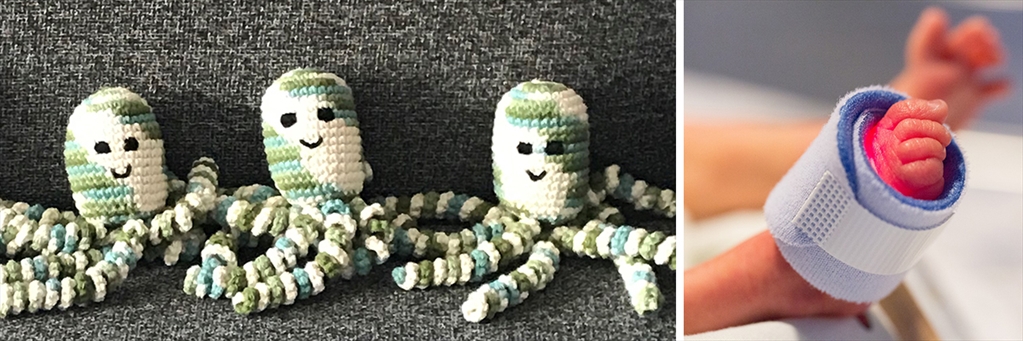 Octopuses crocheted and donated by Diana Spadafora to the neonatal intensive care unit of a Mississauga hospital.
The world is a scary and anxious place for premature babies. To help bring a sense of comfort and calm, a mom-to-be is crocheting octopuses — the tentacles mimic umbilical cords, the texture reminds babies of the womb and they’re less likely to pull out medical monitors and tubes when cuddling with the toys.
Diana Spadafora (BA ’07) donated four octopuses to the neonatal intensive care unit (NICU) at Credit Valley Hospital in Mississauga. She got involved when a friend who knew of her love for crochet suggested that she apply her talent to creating the colourful critters. Moved by the idea that giving a little of her time can help a premature baby feel calmer and develop, Spadafora went online to look for an octopus pattern.
“That was before I found out I was expecting,” she said. “Now that I know I’m having a baby, I’d like to think that if I needed it, someone would do the same for me — it doesn’t take a lot of time or money.”
The idea wasn’t new to Spadafora. Two years ago, her neighbour’s baby came home from the NICU with a crochet octopus.
“I remember when he was a little guy and he would sleep clutching it in one of his arms,” Spadafora said. “He’s two now and he still has it in his stroller with him. They really get attached.”
Of the estimated 390,000 babies born each year in Canada, 7.8 per cent are born premature. That’s more than 30,000 little people who will be at greater risk of serious health issues, including breathing problems, feeding difficulties and developmental delays.
European hospitals were among the first to introduce crochet octopuses or jellyfish to premature babies. At Poole Hospital in Dorset, England, staff reported that some babies had higher levels of oxygen in their blood due to better breathing and more regular heartbeats after being given an octopus.
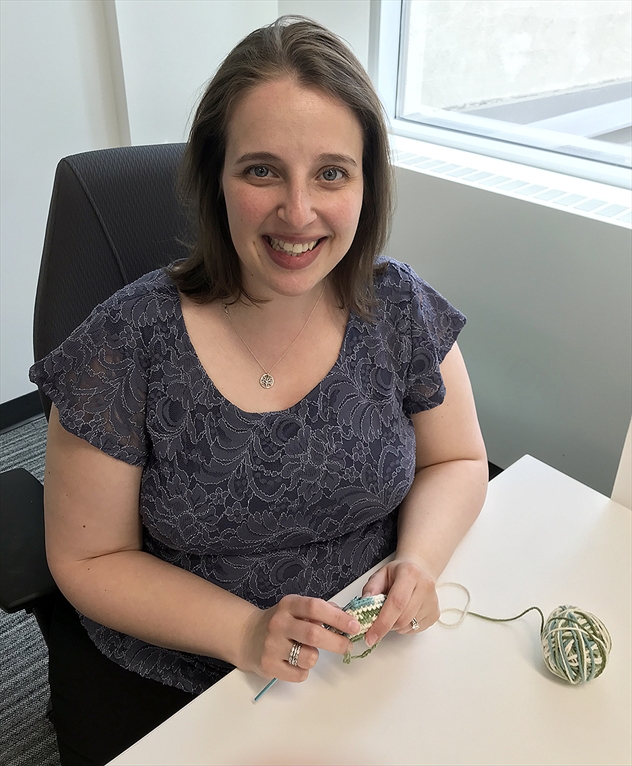
Diana Spadafora started crocheting octopuses for premature babies after being approached by a friend.
Spadafora said it takes her a weekend, working at a leisurely pace with breaks, to crochet each of the toys.
“I usually make the body first, it’s really quick,” she said. “Then I put on the face and work on the tentacles. They take more time and patience.”
“I’m planning to make a couple more before I have my baby and then pick it up again while I’m on mat leave,” Spadafora added.
She started to crochet in high school after learning the craft from her older sister. Spadafora now works as a senior program analyst for the Ontario Ministry of Infrastructure and crochets as a hobby during her time off.
“I have a bit of a fascination with looking at a box of yarn or a box of glass beads and then taking one thing and making it into something completely different,” she said. “It was nice that crafts started becoming trendy again when I was in my undergrad. I remember really liking the Sex and the City episode where Charlotte learns how to knit.”
Spadafora attributes her sense of community to her time at Laurier. Coming from Sault St. Marie, she didn’t have the option of easily returning home on weekends, so she decided to embed herself into the “fabric of the institution.”
“I took advantage of everything the school had to offer. I was on house council, I volunteered with Laurier Students for Literacy and I got involved with the Students’ Union,” she said. “It validated for me that what you put into something you get back tenfold.”
She mentioned Vice-President, Student Affairs David McMurray — who she affectionately calls Daddy Mac — and Leanne Holland Brown, former Dean of Students for the Waterloo Campus, as people who gave her a little of their time and made a big difference in her life.
“They’re the reason I’m an alumni volunteer now,” she said. “It’s really gratifying that a few hours of my time crocheting octopuses can help a baby get better.”